
Evolution of Test Cricket Over the Decades
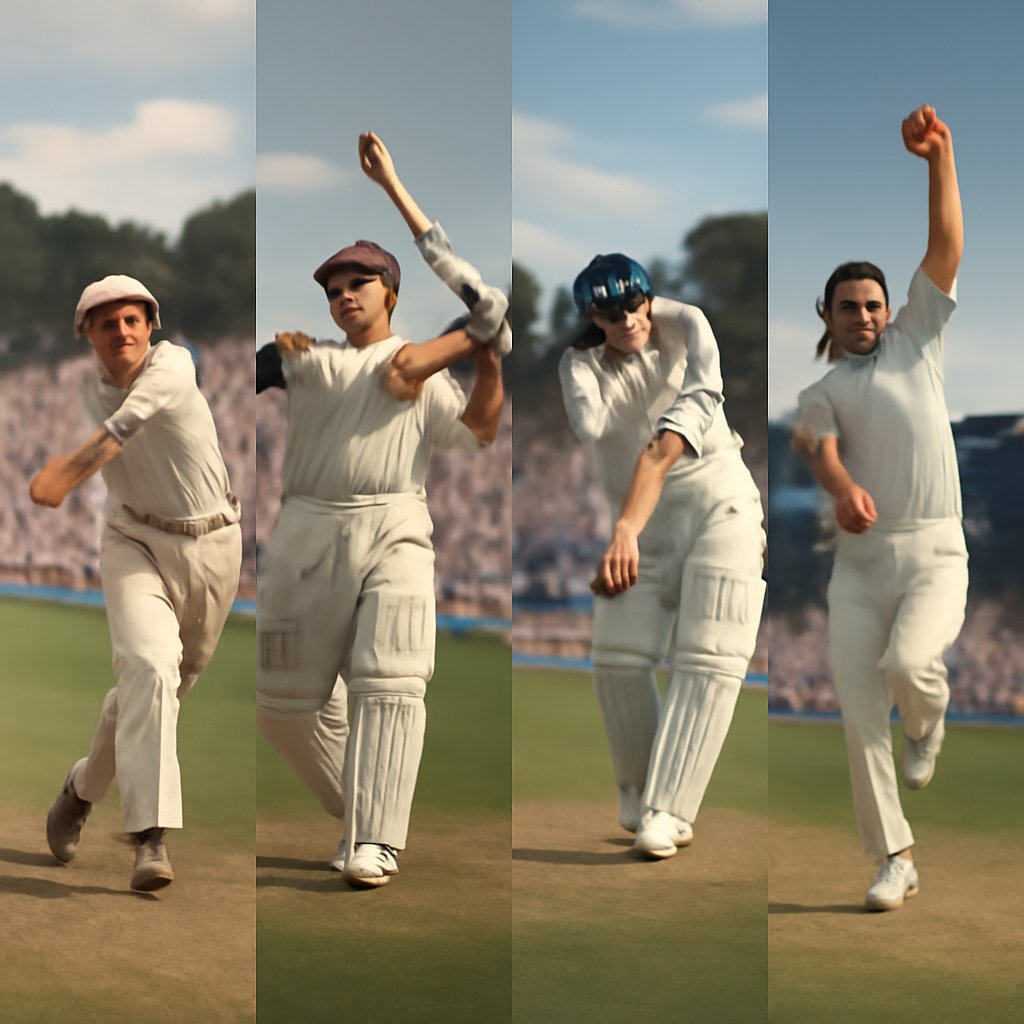
Growing up in Kerala, where the monsoons would pause just long enough for us to sneak in a game on the red laterite soil, cricket was everything. That same patience and craft that shaped our backyard Test matches still defines the longest format today. The evolution of Test cricket over the decades showcases how the oldest version of the game has adapted while retaining its core essence of endurance, technique, and strategy. From its formal beginnings in 1877 to the high-pressure contests of today, Test cricket has weathered changes in rules, technology, player preparation, and the rise of shorter formats like the IPL and One Day International cricket. This long-form version continues to produce legendary player stats that define careers across generations.
The first official match between England and Australia at the Melbourne Cricket Ground in March 1877 set the template for multi-innings battles that would evolve dramatically over subsequent decades. Early contests featured uncovered pitches, rudimentary equipment, and tours lasting months by ship, emphasizing stamina over raw power. By the 1880s, series like the Ashes had already captured global attention. W.G. Grace’s dominance with the bat highlighted individual brilliance amid team rivalries. Player stats from this period remain modest by modern standards, yet they established benchmarks for longevity that later stars would chase. The introduction of the follow-on rule in 1889 further refined tactical depth.
Colonial expansion brought Test cricket to South Africa, West Indies, and New Zealand before the First World War. These matches often reflected social hierarchies of the time, yet they laid foundations for diverse playing styles seen today. The women’s game deserves as much scrutiny as the men’s when we trace these roots, because ICC-led pushes for women’s Test cricket in recent years echo the same pioneering spirit that once spread the format across continents.
The decades following 1945 witnessed rapid growth in Test cricket alongside the birth of One Day International cricket in 1971. Kerry Packer’s World Series Cricket in the late 1970s revolutionized player contracts and introduced colored clothing and floodlights, indirectly influencing Test preparation methods. India’s emergence as a cricketing powerhouse during the 1970s and 1980s added spin-friendly pitches and aggressive batting approaches that contrasted with traditional English seam dominance. Growing up in South India, I saw how Kerala spinners learned their craft on turning tracks that mirrored those Indian pitches, a legacy now visible in the women’s domestic circuit too.
The 1990s saw Australia’s record-breaking run under Steve Waugh, with bowlers like Shane Warne redefining leg-spin statistics. Meanwhile, Sachin Tendulkar’s Test career aggregated over 15,000 runs, showcasing consistency across varied conditions. The DRS system trial in 2008 marked a technological shift that reduced umpiring errors and changed how teams approached close decisions. One Day International cricket’s popularity during this era forced Test specialists to refine their skills against white-ball demands, creating versatile athletes who transitioned smoothly between formats.
Since 2008, the Indian Premier League has profoundly shaped Test cricket. Young talents now gain exposure to high-intensity T20 environments before debuting in the five-day game, leading to more aggressive shot selection even in red-ball matches. Virat Kohli’s Test average above 50 for several years exemplified this blend of IPL-honed timing with classical technique. Day-night Test matches using pink balls began in 2015, addressing scheduling concerns while preserving the format’s integrity. Player workload management has become critical, with IPL franchises and national boards negotiating rest periods to protect stars like Jasprit Bumrah and Joe Root from burnout. Stats tracking has also advanced, with metrics such as expected runs and bowling impact scores providing deeper analysis than traditional averages alone.
Countries like Afghanistan and Ireland have joined the Test arena recently, expanding the global footprint. Meanwhile, the rise of franchise cricket has sparked debates about protecting Test cricket’s primacy, yet many argue the formats complement each other by developing well-rounded players. The ICC continues to champion this balance, especially as women’s Test cricket gains more fixtures and visibility.
The first Test match in 1877 featured only 11 players per side with no substitutes, and Australia won by 45 runs. Sachin Tendulkar holds the record for most Test runs with 15,921 at an average of 53.78. Shane Warne captured 708 Test wickets, revolutionizing spin bowling statistics in the modern era. India has won 11 of its last 15 Test series at home, reflecting the impact of IPL-developed spinners. Day-night Tests have produced 23 matches since 2015, with a 52% win rate for teams batting first under lights. Joe Root surpassed 10,000 Test runs in 2021, becoming England’s leading run-scorer in the format. The highest team total in Test history remains Sri Lanka’s 952/6 declared against India in 1997.
The evolution of Test cricket over the decades demonstrates remarkable resilience. While the IPL and One Day International cricket have altered training methods and player mindsets, the five-day game continues to reward patience and skill. Future decades will likely see further integration of data analytics and scheduling innovations, yet the timeless appeal of Test cricket endures through its rich history and evolving player stats that inspire new generations.


