
Steve Smith Test Batting Technique Breakdown
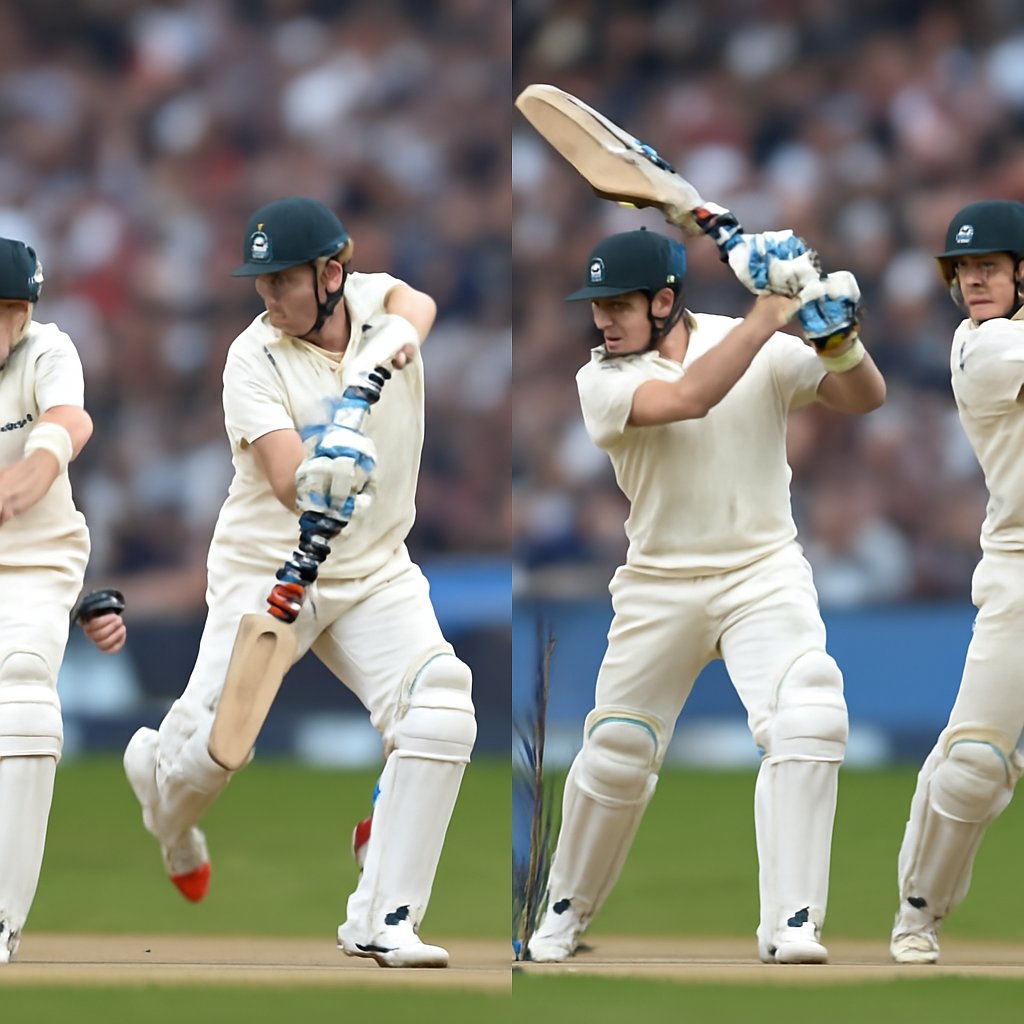
Steve Smith’s Test batting approach has always stood out to me as something truly unique in the modern game, one that blends raw improvisation with a level of consistency that few can match. Having played at the state level in Mumbai, I understand what this requires technically—the kind of balance and late decision-making that only comes from facing quality pace and spin day after day on variable surfaces. Unlike the classical upright methods we in India grew up admiring in players like Sachin, Smith’s style draws heavily from his Rajasthan Royals IPL days, where he learned to manipulate the ball into gaps under pressure, then carried those instincts into red-ball cricket across the world.
His grip and setup immediately catch the eye. The bat face stays slightly open with the top hand lower than most coaches would teach, creating that low centre of gravity and allowing him to stay remarkably still at the crease. In Mumbai, we grew up watching players like this who relied on hand speed rather than perfect foot positioning, and Smith’s trigger tap before release helps him pick up the ball early, especially against the quicks who aim at the stumps. His wider base adds stability on those unpredictable pitches that Test cricket throws up, letting him adjust late to seam movement without committing too early.
When it comes to footwork, Smith keeps things minimal and efficient—small steps that keep him inside the line rather than big lunges. This shows up beautifully against spin on subcontinent tracks, where he presses forward confidently to smother the turn, a skill refined through his IPL exposure that translates so well into longer formats. He favours the leg side with a strong bottom hand, yet his cover drive remains a standout, played with that high elbow adapted to his crouch for better control. These movements help him rotate strike steadily and turn defensive situations into scoring chances, something that echoes the patient accumulation we value so much in Indian Test traditions.
Adaptability across conditions is where his method really shines. On bouncy Australian decks he uses soft hands to tuck the ball leg-side, while overseas in England or South Africa he straightens the bat to handle seam. Against the spin-heavy attacks in India and Sri Lanka, that forward press combined with quick bat-pad adjustments keeps him out of trouble and allows efficient strike rotation. His mental game—constantly reading fields and bowler variations—pairs perfectly with this, helping him handle reverse swing through late deflections and switch seamlessly between defence and counter-attack, much like how limited-overs learnings have influenced so many Indian red-ball careers.
What makes Smith’s technique particularly instructive is his head position throughout the batting stroke. Unlike batsmen who move their head excessively during the backswing, Smith maintains a relatively still head that tracks the ball into the hitting zone. This stillness provides the platform for his exceptional hand-eye coordination and allows him to make those micro-adjustments late in the stroke that catch even quality bowlers off guard. The slight duck of the head during his initial movement actually helps him get a clearer view of the ball’s line and length, enabling those crucial split-second decisions that define his batting.
His leg-side scoring, particularly through the square leg region, deserves special mention. Smith has developed an almost uncanny ability to work the ball into this area even when bowlers are targeting the stumps or slightly outside leg. This comes from his lower grip and the flexibility in his wrists that allows him to roll his hands over the ball without closing the bat face too early. Against short-pitched bowling, he’s equally adept—whether ducking under genuine pace or using a controlled pull shot with a vertical bat to keep it along the ground. This versatility means opposing captains can never quite set a field that fully neutralizes his scoring options.
The numbers tell the story clearly: a Test average above 58, more than 9,000 runs with 32 centuries across 100-plus matches, and an average over 65 against spin. His conversion rate from 50-plus scores to centuries sits near 40 percent, while his overseas average around 50 proves the technique travels. These figures reflect a method built for resilience, sustaining partnerships that anchor innings in tough situations. What’s particularly impressive is his ability to succeed in different phases of his career—his average has remained consistently elite whether batting first, second, or in chase scenarios.
One aspect of Smith’s game that often goes underappreciated is his ability to play the short ball effectively. Rather than relying on the aggressive pull shot that many modern batsmen favour, Smith combines it with intelligent use of the hook and selective ducking. His footwork against the short pitch is minimal but purposeful—he moves slightly across, narrows his stance, and makes a conscious decision about which deliveries to play at and which to avoid. This selective approach has helped him avoid the dismissals that plague aggressive players against quality pace bowling on bouncy wickets.
His record in overseas Test cricket further validates his technique’s portability. In England, where seam and swing dominate, Smith averages around 42—respectable but lower than his home average, showing that even elite techniques face challenges in the English conditions. In South Africa, he’s performed similarly well to his home conditions, while in the West Indies his record has been outstanding. These variations highlight that while his technique is fundamentally sound and adaptable, the conditions still play a role—something that every aspiring Test batsman must understand and accept.
The defensive technique Smith employs is equally refined. His forward defensive stroke is played with a soft bottom hand and a high elbow, allowing him to cushion the ball without creating edges. When defending outside the off stump, he often closes the bat face slightly to negate movement, and his body position ensures he’s not reaching for deliveries. This solidity in defence means he can occupy the crease for long periods without being unduly troubled, allowing him to build innings methodically while wearing down bowlers—a quality essential for Test success.
Smith’s off-stump technique deserves particular analysis. While many modern batsmen struggle with deliveries in the corridor of uncertainty, Smith has developed a system where he either leaves the ball decisively using his eyes and judgment, or commits fully to a stroke. This decisive approach, combined with his ability to play the ball late, means he rarely finds himself caught in two minds—a common downfall for less accomplished batsmen facing quality fast bowling.
Overall, Smith’s technique offers a masterclass in how modern influences like the IPL can merge with traditional Test demands, creating something that continues to inspire players from every cricketing nation while setting new benchmarks for consistency and innovation. His approach proves that unconventional methods, when built on sound fundamentals and refined through experience across formats, can not only succeed but dominate at the highest level of Test cricket.


