
Player Stats Comparison Between Kohli and Sharma
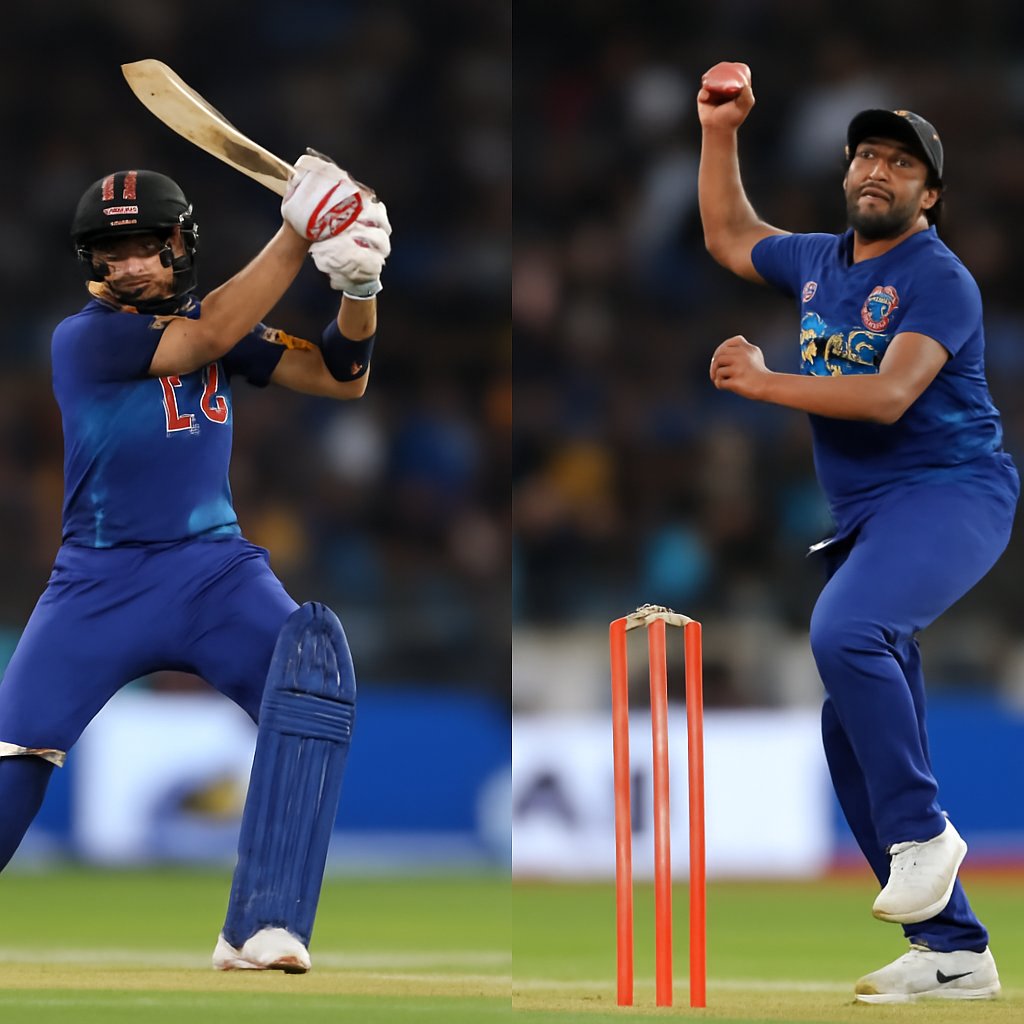
When you line up the numbers for Virat Kohli and Rohit Sharma, what emerges is not just a dry ledger of runs and averages but the story of two very different ways of carrying Indian batting into the modern era. Across Tests, ODIs and the IPL, their methods have complemented each other so neatly that it sometimes feels like watching two sides of the same Mumbai maidans we all grew up on.
In the longest format Kohli has simply been relentless. More than 8,500 Test runs at an average above 49 and 29 hundreds, many of them overseas, tell you everything about his hunger to convert starts. Having played at the state level, I understand what this requires technically: the ability to stay side-on against the moving ball in England or Australia while still keeping the scoring rate alive. His fifty-to-hundred conversion rate remains elite because he treats every session like a fresh innings, something the old Bombay school always prized.
Rohit came to Test cricket later, yet the adjustment has been seamless. Over 3,500 runs at around 45, with those trademark double hundreds, show how his timing and placement translate even when the red ball is 80 overs old. In Mumbai we grew up watching players like this who could shift gears without changing their trigger movements. Since he opened the batting his consistency at home has been remarkable, and the added responsibility of captaincy has sharpened his game further. His Test average at home hovers above 50, demonstrating an almost complete mastery of Indian conditions that few batsmen in the modern era can claim.
The limited-overs numbers highlight the contrast even more sharply. Kohli’s 13,000-plus ODI runs at nearly 58, with 46 centuries, speak of a man who has made chasing an art form. His record in successful chases is particularly striking—he averages above 65 when India are hunting targets, and his ability to construct an innings while maintaining a run rate above 85 has revolutionized how Indian middle-order batsmen approach limited-overs cricket. Sharma’s five ODI double centuries, topped by that unforgettable 264, remain a benchmark for calculated power. His approach to the powerplay as an opener has transformed India’s ODI batting strategy, with strike rates regularly touching 110 in the opening phase while maintaining high conversion rates.
In T20Is both have contributed in their own register—Kohli’s strike rate above 130 providing the middle-order acceleration while Rohit’s six-hitting in the powerplay and death overs has changed how India construct innings. Kohli’s record in T20I chases is particularly remarkable, with several match-winning knocks in high-pressure situations. His ability to accelerate from the 15th over onwards has made him one of the most valuable players in the death overs across international T20 cricket.
The IPL simply magnifies these traits. Kohli’s 7,000-plus runs for Royal Challengers Bangalore at a strike rate above 130, including multiple 600-run seasons, show the same obsessive consistency we see in whites. His four-consecutive 600-run seasons from 2012 to 2015 remain unmatched in IPL history, and his ability to score consistently across all conditions and venues has made him the tournament’s most reliable accumulator. Rohit’s five titles with Mumbai Indians and 6,000-plus runs underline how he peaks when the stakes are highest. Having played at the state level, I understand what this requires technically: the capacity to read a surface in the first over and then decide whether to anchor or explode. His captaincy record at Mumbai Indians is particularly impressive, with a win percentage above 60 and an uncanny ability to orchestrate successful chases under pressure.
When examining their performances against top opposition, notable patterns emerge. Against Australia, Kohli averages above 50 in Tests and ODIs combined, making him one of the few Indian batsmen to maintain such consistency against Australia’s pace attacks. Against England, his record on bouncy pitches shows a 48+ average in Tests, demonstrating his technical excellence against moving ball conditions. Rohit, conversely, has been particularly strong against West Indies in ODIs, with multiple centuries and an average exceeding 55. His performances against Afghanistan and Bangladesh in T20Is also highlight his ability to dominate smaller teams with aggressive batting.
The career trajectories of these two batsmen also reveal interesting contrasts. Kohli reached 50 international centuries faster than any player in history, achieving this milestone in 175 innings. His consistency across formats has been phenomenal, with significant contributions in all three formats simultaneously. Rohit’s journey, by contrast, saw him initially struggle in Test cricket before emerging as a complete player. His transformation from a T20 specialist to a multi-format star took time, but once he settled into Test cricket, his average improved significantly with each passing year. This adaptability has been one of his defining characteristics.
A few records stand out like signposts. Kohli’s three ICC ODI Player of the Year awards, his average above 50 against Australia, Rohit’s unmatched five ODI doubles, and his five IPL titles as captain all speak to sustained excellence. Together they have more than 40 international centuries, a depth that has carried India through every ICC event, culminating in Sharma’s 2024 T20 World Cup triumph. Beyond these headline numbers, their combined century tally represents nearly 12 percent of all centuries India has scored in international cricket since 2008, underlining their role as the backbone of Indian batting for over a decade and a half.
The evolution of their playing styles deserves closer examination. Kohli’s success has been built on aggressive yet calculated batting, combining traditional technique with modern training methods. His emphasis on fitness and nutrition changed how Indian cricketers approach physical conditioning. Rohit’s batting, meanwhile, appears almost effortless, built on timing and reading the ball early. His high elbow position and ability to construct massive innings suggest a player who has synthesized the best of classical batting technique with contemporary demands.
Looking at their records in ICC tournaments specifically, Kohli has been a consistent performer with tournament averages often exceeding 45, while Rohit has tended to peak at crucial moments—his 2015 ODI World Cup tournament being a prime example where he scored over 300 runs including a crucial 113 in the semi-final. Similarly, his captaincy record in international tournaments has been impressive, with India reaching multiple finals under his leadership.
At the end of the day, one man embodies the old Indian virtue of innings-building while the other brings the modern instinct for match-winning cameos. Both have made the game richer for every youngster in Mumbai or Delhi or Chennai who now dreams of wearing the blue jersey. Their complementary styles—one providing consistency and the other delivering in moments that matter most—have defined Indian cricket’s success in the past 15 years. As they continue their careers, their statistical legacy will undoubtedly inspire generations of batsmen to pursue excellence across all formats while maintaining the technical and temperamental balance that international cricket demands.


