
Rishabh Pant Aggressive Batting Style Analysis
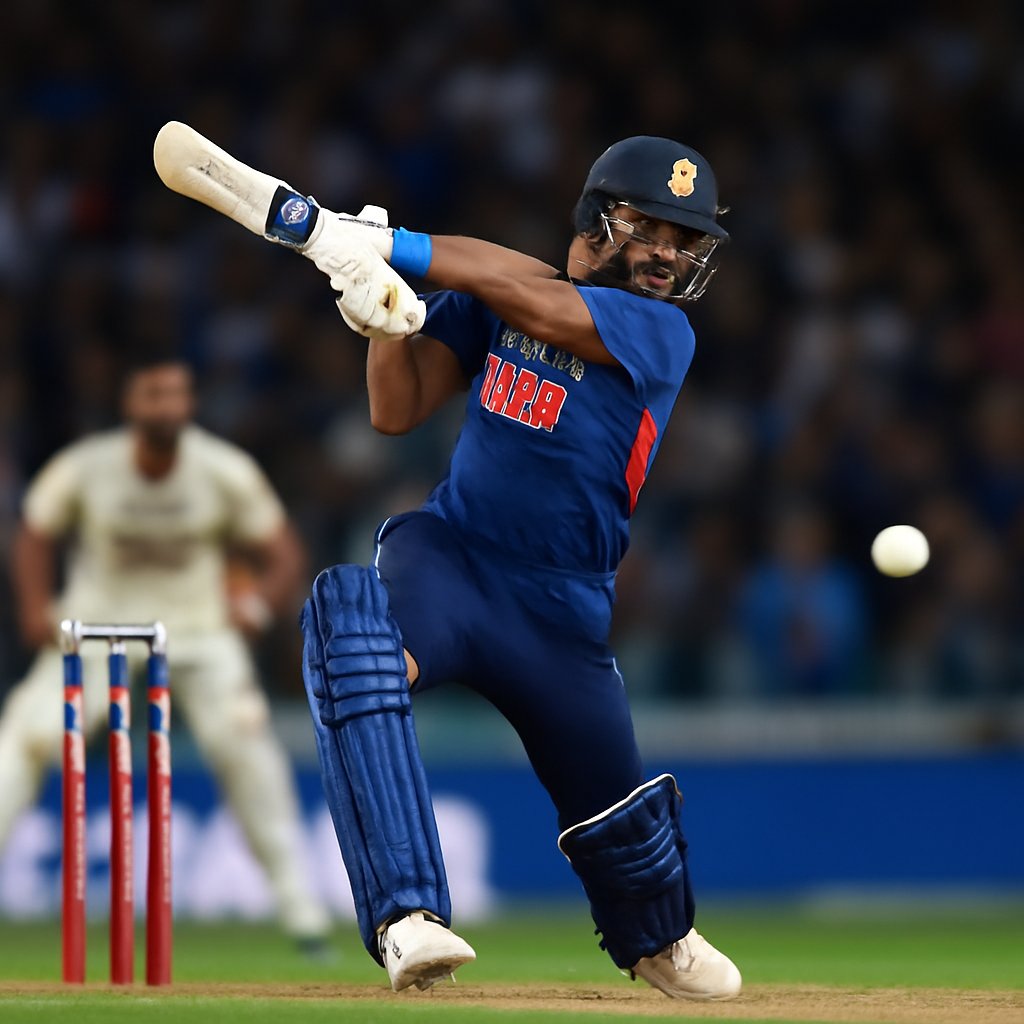
Rishabh Pant’s aggressive batting has lit up Indian cricket like few others in recent memory, mixing raw power, inventive strokeplay and an almost reckless courage that feels right at home in both the IPL and the longer game. Having played at the state level, I understand what this requires technically: the ability to pick length early and still have the audacity to counter-punch when the ball is doing a bit. For Delhi Capitals in the IPL and the national side across formats, he has become that middle-order disruptor who turns matches on their head.
His IPL journey began with Delhi Capitals in 2016, when those lofted drives and reverse sweeps started making bowlers rethink their lengths in the middle overs. The strong bottom-hand grip he uses lets him convert good-length balls into leg-side boundaries with startling regularity. In Mumbai, we grew up watching players like this, boys who treated the Wankhede or Eden Gardens not as places to survive but to dominate. Over time his game awareness has sharpened, helping him read different surfaces without losing that intent.
In recent IPL seasons those quick half-centuries against pace attacks have repeatedly swung momentum Delhi Capitals’ way. His strike rate often climbs past 150 in the death overs through precise scoops and inside-out shots that force captains to keep shifting fields. That pressure creates gaps for the rest of the batting unit, and his consistency in playoffs has made him the player opposing teams fear most when the asking rate climbs.
What makes Pant’s approach particularly effective in the IPL is his willingness to challenge bowlers regardless of their reputation or form. Against death bowlers like Jasprit Bumrah or Jofra Archer, Pant doesn’t shy away from attempting unconventional shots—the ramp, the reverse ramp, and the helicopter sweep have all become weapons in his arsenal. This unpredictability forces captains to adjust their bowling strategies mid-match, often at critical junctures. His ability to score quickly in powerplay overs without getting out has made him a reliable anchor in Delhi Capitals’ top-order setup, capable of building momentum that the middle order can capitalize on.
It is in Test cricket, though, that Pant has truly rewritten what a wicketkeeper-batter can do for India. Rather than the old defensive template we once expected from keepers, he steps out and counter-attacks even against high-quality pace and spin. That 97 at Headingley in 2021, full of pulls and drives that left England rattled, remains a perfect example. Overseas, his quick reading of lengths and punishment of short balls have been central to India’s victories on challenging pitches.
The 2021 tour of England exemplified Pant’s fearlessness at its finest. Beyond the Headingley knock, his aggressive intent put England bowlers under constant pressure, forcing them to abandon traditional lines and lengths. His partnership-building skills have also improved markedly, allowing him to rotate strike effectively with established Test batsmen while maintaining his natural attacking approach. This balance—knowing when to attack and when to build—separates the naturally gifted from the truly complete cricketer, and Pant has demonstrated this maturity repeatedly.
Against spin bowlers, Pant’s footwork has become increasingly sophisticated. His use of the non-striker’s guard to create angles against spinners bowling around the stumps shows tactical awareness that goes beyond raw aggression. In Asian conditions, where spin dominates, his ability to use the crease to negate the bowler’s variations has proven invaluable. He reads the trajectory of the ball earlier than most, allowing him to decide whether to go forward defensively or down the track aggressively with more time than conventional batsmen have.
Biomechanically his slightly open stance allows rapid weight transfer into cuts and pulls, while his decisive footwork against spin—dancing down the track to clear the rope—has helped India chase on tricky surfaces. Batting at five or six, he often absorbs early pressure before unleashing, and that mental resilience has become a hallmark of India’s modern Test approach.
The same aggression travels well into ODIs and T20Is. In the 50-over game he rotates strike in the middle order before exploding in the powerplay or slog overs, with strike rates past 120 in cameos against Australia and England. In T20Is the switch-hit and helicopter shots have become signature weapons in bilateral series and ICC events. He adapts by adding more defensive options early in ODIs, building before releasing, which gives India a more dynamic edge than the pure finishing role we saw from earlier generations.
Pant’s ODI career shows an interesting evolution. Early in his international career, he was brought in primarily as a finisher, tasked with accelerating run rates in the final overs. However, as his experience has grown, he has expanded his role to include stability in the middle overs when needed. This flexibility has made India’s middle order less predictable and more adaptable to different match situations. Against quality new-ball bowling in ODIs, Pant has shown the discipline to leave deliveries outside his range, suggesting that his aggressive mindset doesn’t override cricketing intelligence.
In T20 cricket specifically, Pant’s innovations have influenced how modern cricket is played. The switch-hit against leg-side bowlers, the reverse ramp against short-pitched bowling, and the unconventional angles he creates have forced bowlers to reconsider traditional death-bowling strategies. Younger cricketers often study his shot-making, and coaches across domestic cricket leagues now train batsmen to incorporate some of these techniques into their repertoires.
The numbers tell their own story. Rishabh Pant has scored over 2,500 IPL runs at an average strike rate exceeding 140 for Delhi Capitals. In Test cricket his aggressive batting style has yielded an average above 43 with multiple centuries overseas. Pant holds the record for the fastest fifty by an Indian keeper in ODIs, achieved through powerful boundary hitting. Across 80+ IPL matches, he has smashed more than 200 sixes, underscoring his power-hitting prowess. In Test matches since 2018, Pant’s conversion rate of starts into impactful knocks stands at over 35 percent. His T20I strike rate hovers around 130, with notable contributions in death overs boosting India’s totals. Against spin bowling in IPL, Pant maintains a strike rate above 160, showcasing his footwork mastery. Key milestones include a double century in first-class cricket that highlighted his long-format potential.
Beyond statistics, Pant’s impact on match outcomes has been particularly significant in chase scenarios. In multiple Test matches, his quick scoring during crucial phases has shifted the momentum decisively toward India. His ability to find the boundary consistently, even against disciplined bowling, means that Indian captains can afford to bat deeper knowing that Pant can accelerate the run rate when required. This luxury has allowed India to play with more adventurous batting orders and take more calculated risks in Test cricket.
The evolution of Pant’s game also reflects his work ethic and willingness to learn from failures. Early setbacks, including dismissals to unorthodox bowling and occasional lapses in concentration, haven’t deterred him from his attacking approach. Instead, he has refined the execution while maintaining the intent. This resilience, combined with his technical skill, positions him as a potential generational talent for Indian cricket.
His style keeps evolving, promising more for Indian cricket in every format. The blend of skill, courage and pure entertainment value continues to inspire the next generation, much as the fearless domestic players from our own Mumbai circuit once did for us. As Pant matures as a cricketer, the cricket world watches to see whether he will establish himself as one of the greatest wicketkeeper-batters in cricket history, or if his aggressive approach will ultimately define his ceiling. Either way, his impact on how modern cricket is played—particularly the acceptability of innovation and controlled aggression—has already secured his legacy.


