
أفضل 10 لاعبي كرة سريعة في تاريخ كرة الاختبار
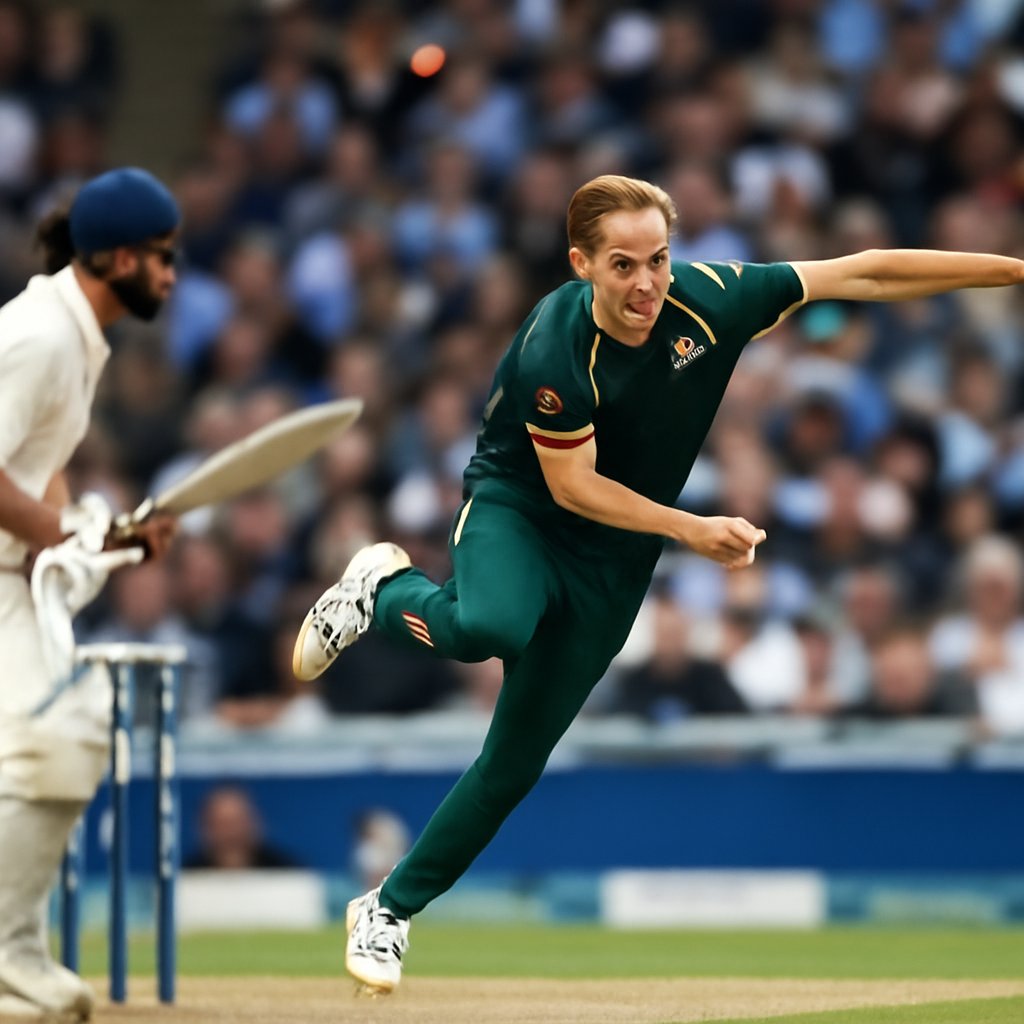
Exploring the ten quickest bowlers in Test history reveals how raw pace has shaped the longest format, from deliveries exceeding 160 km/h to the tactical craft of marrying speed with swing and seam movement. These legends have not only dismantled batting line-ups but also left their mark on modern T20 leagues like the IPL, where similar skills decide matches in the powerplay or death overs. Having played at state level in Mumbai, I understand what this requires technically—the ability to sustain high speeds over five days while reading surfaces that change dramatically from day one to day five.
In Mumbai, we grew up watching players like this on grainy TV broadcasts of the 90s and early 2000s, marvelling at how fast bowlers like Wasim Akram blended left-arm swing with genuine heat. Fast bowling in Tests has always demanded more than sheer velocity; it requires endurance, precision, and the knack of extracting bounce from pitches across five days. Legends such as Shoaib Akhtar and Brett Lee pushed human limits, regularly breaching 150 km/h. Akhtar’s 161.3 km/h mark in international cricket set benchmarks that now inspire young quicks in IPL auctions and domestic circuits. The physical toll often shortened careers, forcing these bowlers to refine their actions for varied conditions worldwide.
Pioneers like Jeff Thomson and Dennis Lillee brought an aggressive Australian edge that terrified batsmen in the 1970s. Thomson generated extreme pace off the pitch, while Lillee paired speed with a devastating outswinger. They laid foundations for later generations who balanced Test demands with lucrative IPL opportunities. Modern data analytics now track every delivery, helping bowlers like Jasprit Bumrah refine their mechanics for both red-ball durability and white-ball explosiveness.
Speed measurement evolved from manual stopwatches to sophisticated radar guns adopted in the late 1990s. ICC’s introduction of Hawk-Eye and speed guns in the 2000s provided reliable data across venues, confirming Akhtar and Shaun Tait’s deliveries as the fastest recorded. These tools also showed how altitude in South Africa or seaming pitches in England amplified natural pace, influencing stats in both Tests and limited-overs series.
Contemporary analysis includes release speed, bounce height, and swing metrics, enabling cross-era comparisons. Brett Lee’s spells above 150 km/h showed remarkable consistency, while Mitchell Johnson used variations with devastating effect. Such numbers shape IPL franchise strategies, where teams chase express pace for powerplays and closing stages, bridging Test fundamentals with the shorter format’s entertainment value.
Compiling the fastest ten demands weighing peak speeds, match impact, and career longevity. Shoaib Akhtar tops most lists with his 161.3 km/h thunderbolt and 178 Test wickets. Brett Lee follows closely with 310 wickets at express pace, his IPL stints showing greater adaptability. Jeff Thomson’s 1970s menace remains legendary, while Malcolm Marshall claimed 376 wickets with Caribbean fire. Courtney Walsh, Glenn McGrath, Wasim Akram, Allan Donald, Dale Steyn, and Shaun Tait complete an arsenal whose combined Test wickets exceed 2500.
Each brought unique traits: Akram’s left-arm swing troubled right-handers for over a decade, and Steyn’s reverse swing in helpful conditions produced match-turning spells. Their influence extends beyond Tests into limited-overs records and IPL scouting reports, where pace remains a prized commodity. Training regimens now incorporate biomechanics to prevent injuries while preserving high speeds, ensuring the next generation can challenge these historical standards.
The technical aspects of fast bowling deserve deeper exploration, particularly how these bowlers adapted their approaches across different formats and conditions. In England’s seaming pitches, express pace combined with natural movement off the surface created nearly impossible conditions for batsmen. Conversely, in Australia’s bouncy, firm pitches, pace bowlers could extract pronounced bounce, making short-pitched deliveries lethal weapons. The Caribbean’s hard, dry pitches allowed bowlers like Malcolm Marshall and Courtney Walsh to generate explosive pace and unpredictable movement. Understanding pitch conditions became as crucial as raw speed—a lesson younger generation bowlers must grasp as they aspire to greatness.
Shoaib Akhtar’s career exemplifies the raw power approach. The Pakistani express bowler didn’t merely rely on pace; he understood when to deploy it strategically. His famous spell against India showcased how sustained pace over extended periods could break down even the strongest batting orders. Yet injuries plagued his career, reminding us that the human body has limits when pushed to such extremes. Modern strength and conditioning has extended careers by incorporating periodised training, proper recovery protocols, and biomechanical assessments that earlier generations lacked.
Brett Lee’s longevity in international cricket across both Test and limited-overs formats offers crucial lessons. Lee maintained an average speed of 145-150 km/h consistently, rarely sacrificing accuracy for sheer pace. This balance proved invaluable in T20 cricket, where he became a sought-after IPL performer. His transition from Test cricket to franchise leagues showed that sustainability mattered as much as peak speed. Lee’s success inspired bowlers to view fast bowling not as a sprint but as a marathon requiring mental toughness, tactical awareness, and continuous evolution.
Dale Steyn’s reverse swing bowling redefined what fast bowling could achieve in the modern era. With 439 Test wickets, he accumulated more wickets than most list members while maintaining speeds consistently above 145 km/h. What set Steyn apart was his ability to generate reverse swing—a skill that requires immaculate seam control and understanding ball conditions. He could make the ball talk in overcast English summers or South African highveld conditions, demonstrating that intelligence combined with pace produced the most formidable fast bowlers.
The psychological impact of facing genuine express pace cannot be understated. Batsmen approaching 160 km/h deliveries face milliseconds to react, often defaulting to defensive techniques that limit scoring opportunities. This inherent advantage explains why franchises in the IPL invest heavily in pace bowling—express bowlers create pressure in ways slower bowlers simply cannot replicate. The intimidation factor, while less discussed than technical metrics, remains a potent weapon in a fast bowler’s arsenal.
Jeff Thomson’s legacy from the 1970s demonstrates that pace bowling excellence transcends eras. Though radar guns weren’t available during his prime, cricket historians and contemporary batsmen estimated Thomson’s speeds at 160+ km/h based on how balls behaved off the pitch. His ability to generate excessive pace from a round-arm action baffled engineers and batsmen alike. Thomson’s era proved that pure speed, when applied with hostile intent and minimal batsman reaction time, could dismantle world-class batting line-ups despite lacking modern technology for validation.
Wasim Akram’s left-arm swing bowling introduced a different dimension to the express pace discussion. While not the fastest bowler overall, Akram’s ability to combine pace with movement made him virtually unplayable for extended spells. Right-handed batsmen, comprising the majority of Test cricket, found Akram’s angle of approach and swing movement particularly troublesome. His 414 Test wickets came through intelligence and variation as much as raw speed, illustrating that the greatest fast bowlers often mastered skills beyond pure velocity.
Glenn McGrath’s success with less extreme pace than several counterparts highlights the importance of line, length, and consistency. McGrath’s 563 Test wickets came through relentless accuracy and understanding opposition batsmen’s weaknesses rather than pure speed. This approach proved exceptionally valuable in Australian conditions where his natural outswing found edges regularly. McGrath’s career demonstrates that while express pace wins headlines, sustained excellence through precision bowling accumulates more wickets and greater match impact.
Modern training science has revolutionized how fast bowlers develop and maintain pace. Video analysis, force plate technology, and biomechanical assessments identify technical inefficiencies that could rob a bowler of velocity. Younger players now understand the importance of core stability, shoulder mobility, and lower body power in generating pace. These scientific approaches have extended careers and allowed bowlers to maintain high speeds deeper into their thirties—something rare among earlier generations.
The role of mental preparation in sustaining express pace deserves recognition. Bowling at 155+ km/h demands intense concentration and emotional control. Bowlers must manage frustration when edges don’t carry, maintain aggression despite setter batsmen, and execute accurately under pressure. The greatest pace bowlers combined physical gifts


