
Fastest Centuries in Test Cricket History
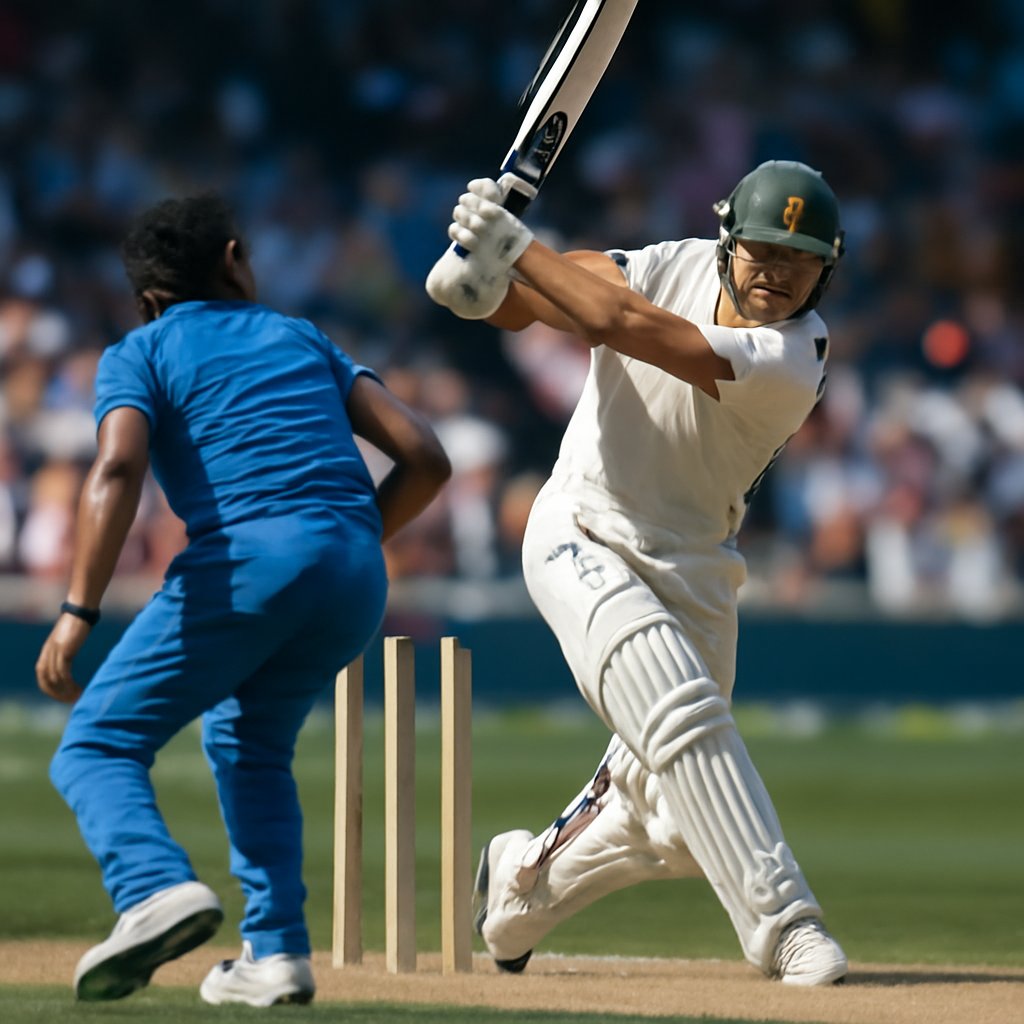
Fastest centuries in Test cricket have always been those rare explosions that cut through the format’s traditional patience, turning a five-day battle into something electric. Growing up in Mumbai, we watched players like Tendulkar and later the IPL generation blend that old-school resilience with modern power-hitting, and it is fascinating to see how the record books reflect this shift. Having played at the state level, I understand what this requires technically—the precise judgment of length against swinging deliveries, the quick feet to counter spin on turning tracks, and the sheer intent to dominate from ball one without throwing your wicket away.
Test cricket was once defined by uncovered pitches and defensive accumulation, yet the modern era has seen an aggressive mindset seep in, heavily influenced by T20 leagues like the IPL. The change picked up pace in the 1980s, when batsmen began taking on bowlers immediately rather than settling in. Early milestones set the tone, none more striking than Vivian Richards’ 56-ball hundred against England in 1986. That knock showed the West Indian great’s mastery of timing and power, inspiring generations to marry raw strength with calculated placement. In comparison to today’s standards, it proved that even in the longest format, rapid scoring could thrive without disrupting the strategic depth of the game.
Brendon McCullum owns the outright record with his 54-ball century against Pakistan in 2016 at Hagley Oval, an innings packed with 11 fours and six sixes that announced New Zealand’s fearless approach. This remains unmatched, highlighting exceptional hand-eye coordination and a willingness to take on both pace and spin from the outset. McCullum retired soon after, turning the knock into a lasting farewell to Test cricket. Close behind are efforts from players like David Warner, whose 69-ball hundred against South Africa mixed brutal pulls with delicate deflections. Warner’s ability to carry that tempo from Tests straight into IPL campaigns makes him a standout in multi-format player analysis, especially on pitches offering bounce.
The context surrounding these rapid centuries reveals much about modern Test cricket strategy. When a batsman arrives at the crease with the intention to score quickly, it often signals a specific match situation—typically a chase in the final innings where the equation demands acceleration, or occasionally a declaration being set up. McCullum’s record century came during the second innings of a Test where New Zealand was chasing, meaning the tactical freedom to attack was already in place. This differs markedly from centuries scored in first innings, where patience and building an innings remain paramount. Understanding these contexts helps fans appreciate not just the spectacle, but the cricket intelligence at play.
Asian batsmen have added their own chapter, often adapting subcontinent conditions—variable bounce, sharp turn, and slower outfields—for quick scoring. Names like Misbah-ul-Haq and recent Indian talents stand out here, with performances that translate directly when the same players enter IPL auctions, where franchises prize consistency across formats. In Mumbai’s maidans, we grew up seeing this adaptability drilled into young players through endless sessions against spin. The ability to read spinners early in their spell, pick the length quickly, and position oneself for singles and boundaries becomes invaluable when chasing aggressive targets on turning pitches.
One fascinating aspect often overlooked is the relationship between ground dimensions and fast-scoring records. England and Australia host disproportionately more of these rapid centuries, not merely due to favorable pitches for batting, but because ground sizes differ substantially. Smaller English grounds like Old Trafford and The Oval have tighter boundaries compared to some subcontinental venues, making boundary-hitting statistically more achievable. This geographical dimension affects not just Test records but influences how players prepare differently depending on tour destinations. A batsman heading to England might specifically work on driving through the covers and pulling short balls, knowing that the shorter square boundaries reward attacking cricket.
The evolution of fast-scoring in Test cricket correlates directly with changes in bowling tactics. Modern pace bowlers have adapted by bowling fuller lengths and using variations like slower balls, yorkers, and cutters earlier in their spells—a defensive strategy against aggressive batsmen. This cat-and-mouse game has made rapid centuries require not just raw power but sophisticated shot-making. The batsmen executing these quickfire knocks possess an expanded range of strokes: scoops, reverse sweeps, and deliberate inside-edges directed to fine leg are now part of the tactical arsenal. Twenty years ago, attempting such shots in Test cricket would have invited ridicule; today, they’re recognized as legitimate match-winning tools.
Spin bowling dynamics have similarly shifted. Against spinners, batsmen no longer play cautiously—they use the crease actively, stepping out to meet the ball fuller, employing reverse sweeps, and taking calculated risks. Bowlers compensate by setting wider fields, bowling shorter, and employing negative lines, which paradoxically can allow quick singles. The interplay between aggressive batting and defensive bowling tactics has created fascinating Test cricket narratives where fast centuries emerge from tactical battles rather than simple one-sided domination.
The physiological and psychological demands of scoring rapidly in Test cricket deserve consideration too. Unlike T20 cricket where aggressive mindsets can sustain for 20 balls, a Test century at a fast rate demands sustained intensity across 50-70 balls while maintaining concentration. Players must process information about bowling patterns, field placements, pitch behavior, and match situation simultaneously. The mental fatigue from constant decision-making about whether to attack the next ball often exceeds the physical demands—a counterintuitive reality that separates elite fast-scoring batsmen from competent hitters.
Key points from the records include McCullum’s 54-ball effort as the benchmark, only five sub-70-ball centuries since 2000 amid improved bowling attacks, frequent occurrence in second innings during chases, strong crossover success into IPL numbers for top performers, a drop in average balls faced from around 80 in the 1990s to under 65 now, England and Australia grounds hosting many due to favorable surfaces, and ODI centuries typically arriving 20-30 balls quicker than their Test counterparts.
Looking at statistical trends, the average balls required for a Test century has decreased noticeably but not uniformly across all batsmen. While opening batsmen tend to construct innings more carefully, middle-order batsmen—particularly those in number three to six positions—now average significantly fewer balls to reach century status compared to their predecessors. This shift reflects both playing philosophy changes and the pipeline from T20 cricket creating batsmen comfortable with aggression earlier in their Test careers.
These milestones keep Test cricket alive by fusing its endurance roots with the boundary-hitting flair fans now expect, especially as exposure to IPL and limited-overs cricket refines player technique for the next generation. The fastest centuries serve as reminders that Test cricket, despite its five-day format, continues evolving—remaining vibrant, exciting, and capable of producing moments that rival any format in their drama and technical brilliance.


