
History of One Day International Cricket Format
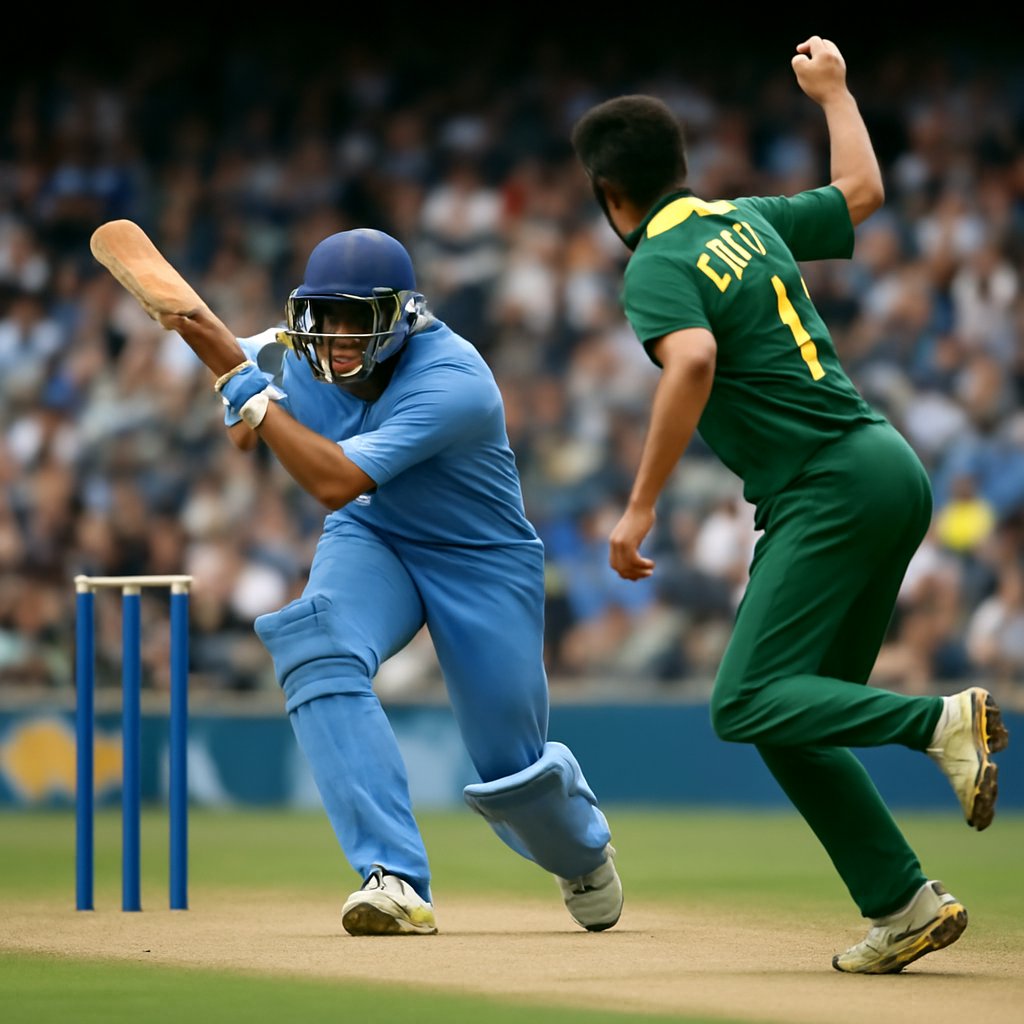
The history of One Day International cricket really begins in those rain-soaked English summers of the 1960s, when administrators realised that five-day Tests were losing spectators the moment the covers came on. What started as a practical fix—40-over and then 50-over List A games—quickly showed that limited-overs cricket could pack grounds in a way traditional formats sometimes couldn’t. Having played at the state level in Mumbai, I understand what this requires technically: you need to recalibrate your entire approach to batting and bowling inside a fixed number of deliveries, something we rarely practised in the longer games we grew up on.
Those early experiments in county cricket, especially the Gillette Cup from 1963, proved the format could stand alongside Tests without threatening their prestige. Australia adopted it with their trademark aggression, and soon the rest of the world followed. The first official ODI, played on 5 January 1971 at the Melbourne Cricket Ground between Australia and England, came about because a Test was washed out; Australia chased 190 in 40 overs and won by five wickets. In Mumbai, we still talk about how that single match changed the economics of the game forever.
That inaugural match set the template for what would become a global phenomenon. The MCG crowd that day had no idea they were witnessing the birth of a format that would eventually rival Test cricket in popularity and commercial value. The speed of play, the clarity of outcome within a single day, and the reduced time commitment all appealed to both casual and dedicated cricket followers. It was a format designed for modern life—you could work during the day and still catch the complete match in the evening, something impossible with a five-day Test.
By the mid-1970s the West Indies, India, Pakistan and New Zealand had all joined the circuit. Triangular series became regular features, and the 1975 World Cup in England turned the format into a global spectacle, with Clive Lloyd’s West Indies lifting the trophy. The 1983 triumph under Kapil Dev remains the moment every Indian of my generation remembers—suddenly every gully in Mumbai had kids practising lofted cover drives instead of just forward defensives. That victory in particular demonstrated that ODI cricket could transcend geography and sporting tradition; India, a nation still building its cricketing infrastructure, could compete on equal terms with established cricket powers.
Rule changes arrived steadily: the shift to a full 50 overs per side by 1975, coloured clothing, day-night matches, and the powerplay blocks that keep evolving even today. These tweaks were designed to keep bat and ball in balance, and as someone who has faced both 90-over spells and 10-over death bursts at state level, I can tell you the mental switch required is enormous. The 1996 World Cup on the subcontinent further showed how ODIs could generate national fervour the way only India and Pakistan know how. That tournament’s innovation of coloured clothing and floodlit matches proved transformative, making the format visually distinct from Test cricket and attracting audiences who might otherwise have overlooked it.
The powerplay concept, introduced in the 1990s and refined considerably since, fundamentally altered how teams strategise in ODIs. Initially, fielding restrictions during the opening overs were modest, but they’ve evolved to create genuine tactical moments where captains must decide whether to attack or consolidate. Modern powerplay conventions—typically 15 overs of varied fielding restrictions—have created specialist opening batsmen whose approach differs markedly from middle-order players. The rise of aggressive opening partnerships, pioneered by players like Virender Sehwag and now seen in every international ODI team, traces directly back to these powerplay modifications.
The success of the 50-over game directly fed into the creation of the IPL. Many of today’s T20 stars—Kohli, Rohit, even the current generation—cut their teeth learning to build innings across 50 overs before they mastered the art of the 20-over explosion. Sachin’s 18,000-plus ODI runs and Kohli’s record chases still serve as the gold standard we measure every new middle-order batter against. In Mumbai we grew up watching players like this balance red-ball patience with white-ball calculation, and that remains the Indian cricket tradition. The progression from Test cricket to ODI to T20 has become almost mandatory for aspiring international cricketers, with each format teaching distinct lessons about pacing, risk management, and situation awareness.
A critical evolution came with the introduction of one-day international series outside World Cups. By the 1980s and 1990s, bilateral ODI series became the bread and butter of international cricket scheduling. These series allowed emerging nations to develop ODI expertise and gave established teams consistent match practice. Pakistan’s consistent excellence in ODI cricket throughout the 1990s and 2000s, despite occasional Test struggles, exemplifies how the format’s repetition helps teams build winning cultures. The frequency of ODI matches also meant that statistical records became more meaningful—players could accumulate centuries and establish legacies within a single decade of international cricket.
Television rights became increasingly significant from the 1980s onwards. The visual clarity of ODI cricket, with its defined beginning and end, made it far more attractive to broadcasters than Tests. The shift to day-night matches with white balls and coloured clothing was explicitly designed to capture prime-time television audiences. By the early 2000s, bilateral ODI series were generating substantial revenue for cricket boards, funding the development of domestic cricket structures and player salaries. This financial model fundamentally changed the economics of cricket globally.
Key milestones have stayed consistent through the decades: the inaugural 1971 match used 40 overs, standardised to 50 by the first World Cup; Tendulkar’s 49 centuries remain the benchmark; England’s 498 for 4 against the Netherlands in 2023 is the highest team total; India’s two World Cup wins (1983 and 2011) sit alongside Australia and the West Indies; and day-night fixtures now dominate bilateral schedules because they maximise television audiences across time zones. These records represent not just individual achievement but the evolution of the format itself—higher run rates, more aggressive batting approaches, and changing bowling philosophies have all contributed to the explosive scores we see in modern ODI cricket.
The introduction of Decision Review System (DRS) technology in ODI cricket added another layer of fairness and precision to the format. While DRS has proven more crucial in Test cricket due to its length, its presence in ODIs represents cricket’s broader embrace of technology to ensure accuracy in crucial moments. The format’s rules regarding wide balls have also evolved, with stricter interpretations in recent years designed to prevent excessive bowling outside the crease.
Ultimately, the ODI format has acted as the bridge between the five-day Tests we revere and the franchise cricket that pays the bills today. It continues to evolve while preserving the core appeal that first drew crowds in the 1960s—decisive results, attacking cricket, and moments that entire nations still celebrate long after the final ball is bowled. As cricket continues to adapt to modern entertainment preferences, the ODI format remains the essential middle ground, combining the strategic depth of Test cricket with the pace and accessibility of shorter formats.


