
Most Catches by Fielders in Test History
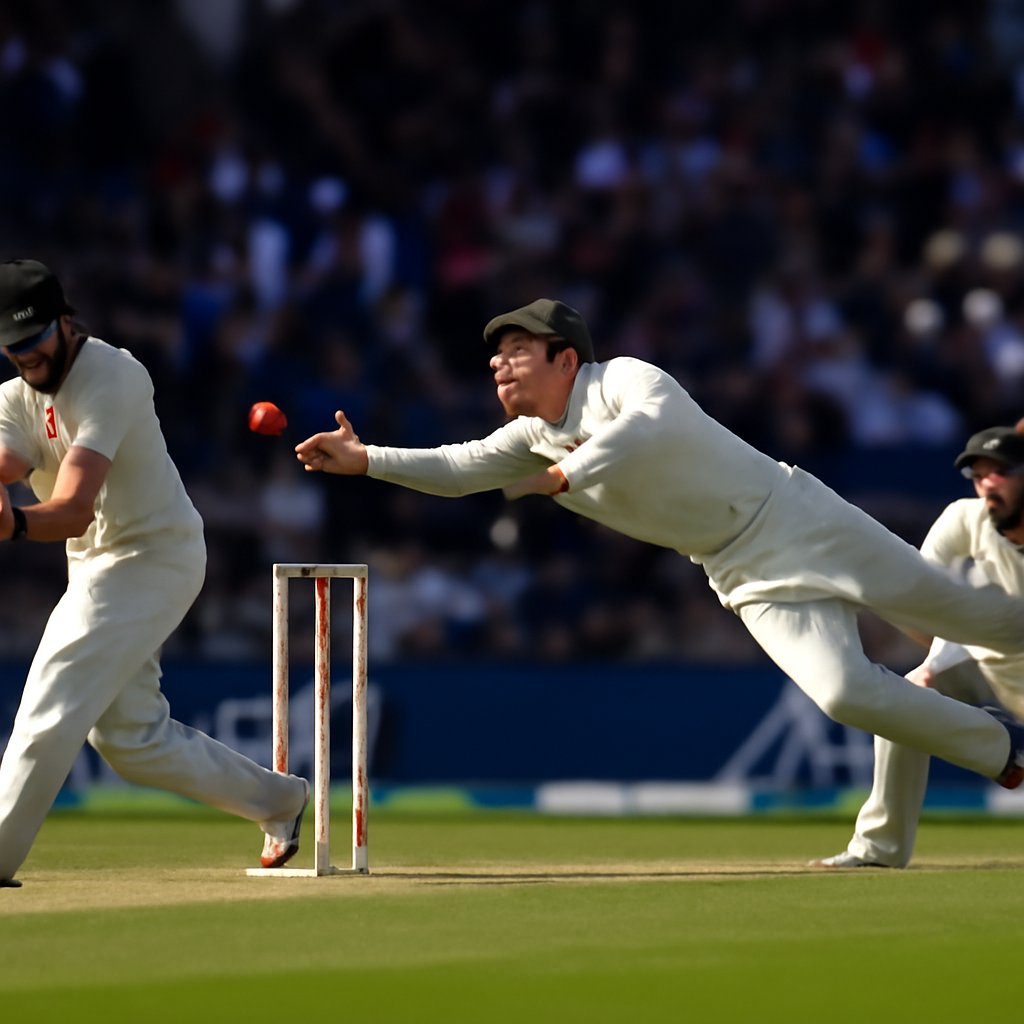
When you look at the most catches by fielders in Test history, what stands out is how the longest format rewards anticipation and positional discipline far more than raw athleticism alone. Rahul Dravid sits at the top with 210 catches across 164 Tests, almost all of them taken at first slip where the edges from genuine pace come thick and fast. Having played at the state level, I understand what this requires technically: the ability to hold your ground for session after session without letting concentration slip even for a ball. Close behind are names like Mark Waugh with 181 and Jacques Kallis with 200, the latter achieving something rare by combining those catches with over 10,000 Test runs—an all-round benchmark that still feels almost impossible.
In Mumbai we grew up watching players like this, where the maidans taught you to read the seam early and trust your hands under pressure. Modern stars have pushed the numbers too. Virat Kohli has crossed 150 catches through sharp reflexes at gully and slip, while Joe Root keeps climbing the ladder. What has changed since the 1990s is the professional approach to fielding. Back then, natural athleticism carried legends like Colin Cowdrey; today, video analysis and data-driven positioning let fielders anticipate trajectories better, especially on seaming pitches or turning tracks in Asia.
The IPL has played its part here. Players who cut their teeth in those high-intensity outfield roles often bring quicker reactions into the Test arena, translating boundary speed into slip cordon safety. Yet the psychological demand remains unique to the five-day game—standing in slips for long spells in Chennai or Ahmedabad heat tests mental stamina as much as hand-eye coordination. Slip fielders still account for nearly 60 percent of all Test catches, which explains why the elite numbers sit above 150 for only a handful of players.
Records show that six catches in a single innings has been achieved more than once in helpful conditions, and average catch rates per Test have risen by 25 percent since 2000 thanks to better training. Teams with superior catching win more often, a truth any Indian side that has toured overseas knows intimately. The bar keeps rising, but the fundamentals—soft hands, early pick-up, and unwavering focus—stay the same.
Beyond Dravid’s 210, the leaderboard reads like a hall of fame of Test cricket’s finest. Sachin Tendulkar’s 115 catches, though fewer than some peers, came predominantly in the outfield and slip positions during his 200-Test career. His longevity and consistency across decades make the number even more impressive when you consider the varied conditions and bowling attacks he faced. Steve Smith, who continues to add to his tally, has demonstrated that modern batsmen-turned-slip fielders can match the traditional specialists. His positioning at slip and gully has become almost as feared by opposition batsmen as his batting prowess, showing that elite fielders come from all backgrounds within a team’s composition.
The position a fielder occupies heavily influences their catch count. First slip, where Dravid made his mark, naturally accumulates more catches because it’s the prime position for edges off pace bowling. The first slip fielder stands closest to the stumps on the off side, directly in line with the first slip position’s traditional role. Second slip and third slip, while still productive, see fewer balls. Gully fielders, who operate between point and third man, take a different type of catch—often off deliveries that move away slightly or are played at. Players like Andy Flower and Brendon McCullum built substantial catch tallies partly through their willingness to field in multiple positions, adapting to team needs across different eras and conditions.
The relationship between catches and Test matches played cannot be ignored. Longer careers naturally accumulate higher totals, but per-Test averages reveal the truly exceptional. A fielder averaging over 1.2 catches per Test across a career demonstrates elite-level consistency. This is where specialists shine brightest—they maintain focus and positioning through hundreds of Tests in a way that fulfills multiple roles simultaneously. The comparison becomes particularly interesting when examining players like Kumar Sangakkara, who took 105 catches in 134 Tests while maintaining his primary role as a keeper and batsman, or modern wicketkeepers like BJ Watling, whose glove work has added significantly to their teams’ catching statistics.
Weather and pitch conditions play an underrated role in catch accumulation. On lively seaming pitches in England, New Zealand, or South Africa, edges come more frequently, and slip fielders enjoy higher success rates. Conversely, on flat, turning pitches in the subcontinent, catches in the cordon become fewer as batsmen don’t edge the ball as readily. This is why fielders who’ve played across multiple countries and climate zones often boast higher career catch totals. The ability to adjust technique based on pitch behavior—moving slightly deeper on seaming surfaces, standing closer on turning pitches—separates the great from the merely good.
The evolution of bowling attack strategies has also influenced catching statistics. Fast bowling partnerships that maintain consistent line and length create more edges than erratic bowling. This is why teams with world-class pace attacks, like Australia in the 1990s-2000s with McGrath and Gillespie, or the current Indian side with Bumrah and Shami, tend to field slip cordons that accumulate catches rapidly. The responsibility flows both ways—quality bowling breeds quality catching opportunities, and sharp fielders encourage bowlers to maintain precision.
Training methodologies have transformed how young fielders approach slip fielding. Modern coaching emphasizes reaction drills, reflexive hand positioning, and mental preparation specific to slip fielding. Players now train extensively with specialized coaches who focus solely on catching technique. The investment in fielding infrastructure—from slip-catching nets to high-speed ball projection machines that simulate edges—has professionalized what was once considered a natural skill that couldn’t be taught. This democratization of fielding excellence means that catch records will likely continue rising as future generations benefit from these advantages.
Interestingly, some of Test cricket’s best slip fielders never accumulated enormous catch totals simply because their careers were shorter or they played different positions. Jonty Rhodes, widely regarded as one of cricket’s greatest fielders overall, never exceeded 120 Test catches because he spent much of his fielding time in the outfield rather than slips. This reminds us that raw catch numbers don’t always reflect fielding brilliance—context matters enormously.
The psychological aspect deserves deeper examination. Slip fielders face constant pressure because the margin for error is negligible. A dropped catch in the slips often costs a team dearly, sometimes deciding entire Test matches. The mental resilience required to recover from a dropped catch and remain perfectly positioned for the next ball separates elite fielders from competent ones. Dravid’s 210 catches represent not just technical excellence but an iron will and unshakeable confidence across 164 Tests.
Looking forward, younger players like Shubman Gill and Rishabh Pant are already establishing themselves as exceptional fielders, suggesting that Test cricket’s future will continue to see rising catch tallies. The accumulation of records depends not just on individual brilliance but on sustained careers in the five-day format, something that’s becoming increasingly challenging in modern cricket’s crowded schedule. Nevertheless, the next player to challenge Dravid’s record will have emerged through these improved training systems, benefiting from video analysis and data that previous generations never accessed, making their achievement that much more remarkable.


